Jun 08, 2026
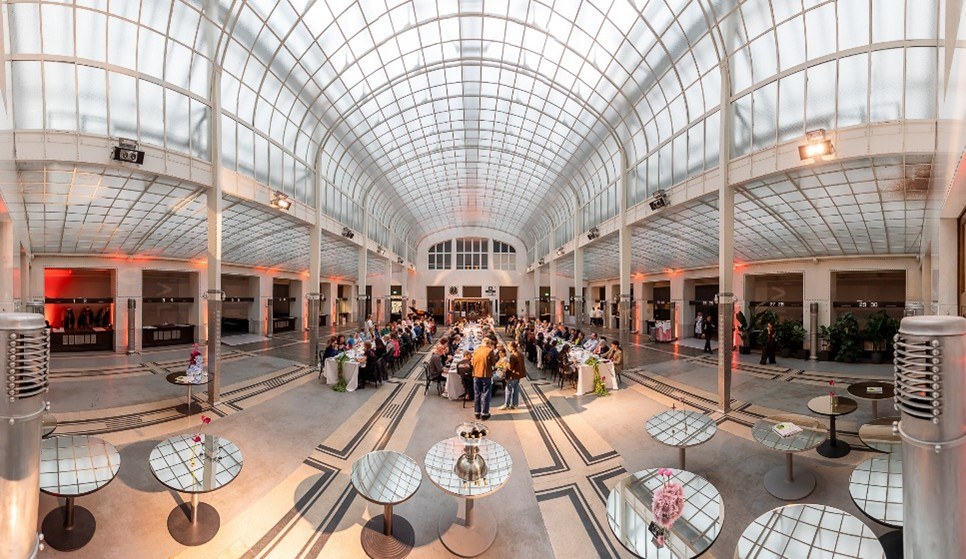
(c) Sebastian Kreuzberger
The Invisible Infrastructure
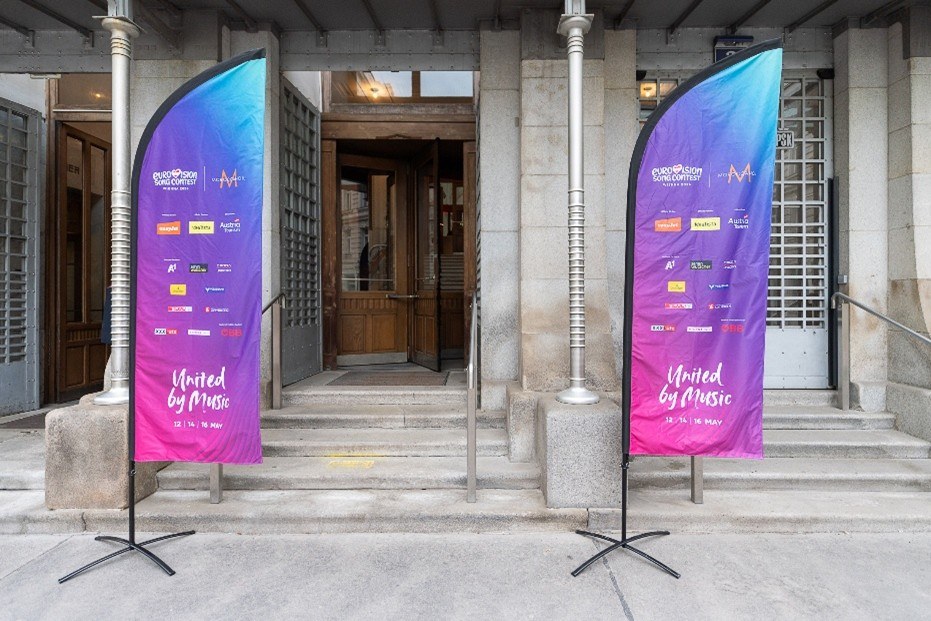
When I arrived at the Eurovision 2026 backstage experience in Vienna, I needed to produce ID. That was it. What I did not see - and was not supposed to see - was the infrastructure behind that small ask.
Every person given backstage access had undergone a background check. Every truck and shipment arriving at the venue had been checked multiple times. Dogs were on site. According to the production team, security was the single highest cost of the entire event - more than the stage, more than the broadcast infrastructure, more than the set construction. This was an event that sold 95,000 tickets across 75 countries and drew an expected global TV audience of 166 million. The stakes were as high as they get.
And yet, across all of our visits, I saw one dog. The experience was welcoming, warm, and free-flowing. Free public transport was laid on across the city. Activations ran in neighborhoods well beyond the venue. On the night of the Grand Final, 30,000 fans gathered in the rain at Rathausplatz for the public viewing. Nothing impeded the joy.
The Gap Between Having a Plan and Practicing It
Vienna’s security model did not happen by accident. It happened because the city has a culture of doing big events well and because the investment in invisible infrastructure was treated as non-negotiable, not as a line item to trim.
Most association conferences operate on a much smaller scale, but the principle applies directly. The gap I see consistently in our industry is not between organizations that care about safety and those that do not. It is between organizations that have a crisis manual and those that have practiced it.
There is a difference between a document that lives in a cupboard and a communication tree that every key stakeholder has memorized.
The Questions Worth Asking Your Destination Before You Sign
- What are the destination’s and venue’s communication channels with local authorities in a crisis? Who calls whom and in what order?
- What is the formal risk assessment procedure for the venue, and has it been updated in the past 12 months?
- What are the specific scenarios the venue team has planned for, and what does the communication tree look like for each?
- Do you have your attendee list in a format that is accessible if your event management system goes offline - printed, on a memory stick, in someone’s bag?
- Who is your inner circle for a crisis, and how do they communicate in a way that does not depend on a single platform or internet connection?
- Is your crisis manual something you have read recently, or something you would have to find first?
The Questions Worth Asking Yourself
Vienna’s security worked because it was done thoroughly and then made invisible. That is the goal: protect everyone, let no one feel policed, and make the experience so seamless that the only memory attendees carry home is how welcome they felt.
Let Talley Help You Build Your Event Safety Framework