Jun 10, 2026
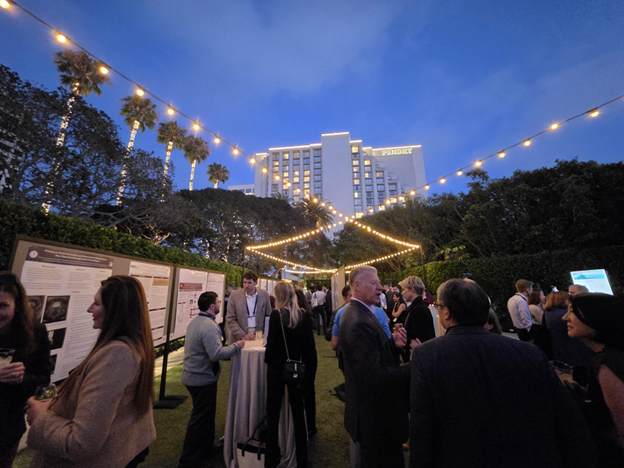
Talley’s team partnered with the American Radium Society on its successful Annual Meeting in Newport Beach, bringing together leaders in oncology for impactful education and meaningful professional exchange.
Association events have always played a central role in bringing members together, sharing knowledge, and strengthening professional communities. For a long time, event attendance was driven by habit as much as intent. If an event was relevant to an industry, people showed up...but that dynamic has shifted.
Today’s attendees are more deliberate. They are comparing association events not only against other conferences, but against everything competing for their time: work priorities, travel costs, digital learning, and the expectation that any experience away from the office should deliver clear value.
In that environment, “good enough” programming is no longer enough. Attendees are paying closer attention to what they will actually gain from attending, and that is reshaping how successful association conferences are designed.
Why Attendees Care More About Outcomes Than Agendas
A detailed agenda used to be one of the strongest selling points for an association event. A packed schedule signaled value, expertise, and depth. However, that signal has weakened.
Today’s attendees are less focused on how much is offered and more focused on what they will walk away with. They are evaluating event programming based on outcomes, not volume.
Instead of asking what sessions are available, they are asking what problems the event will help them solve. Instead of focusing on speaker lists, they are looking for insights they can immediately apply in their roles.
This shift has changed how associations need to think about content design. Sessions cannot exist simply to fill time blocks. They need to deliver clear relevance and practical application.
When attendees can easily connect an association conference to real-world impact, engagement increases. When that connection is unclear, even strong programming can lose its effectiveness.
How Associations Can Design Networking That Actually Works
Networking at conferences remains one of the top reasons attendees choose to attend association events, but expectations around it have evolved significantly.
Traditional open networking formats are often no longer enough on their own. Large receptions and unstructured mixers can feel inefficient for attendees who are balancing limited time with high expectations.
What works better today is intentional design.
Attendees respond more positively to networking that feels structured and purpose-driven. When interactions are built around shared challenges, industries, or professional roles, conversations become more meaningful and less transactional.
Formats like facilitated discussions, peer group sessions, and topic-specific meetups often create stronger engagement than general networking alone. The goal is no longer just bringing people together. It is ensuring the right people are connecting in the right context.
When event networking strategies are designed with intention, they become one of the most valuable parts of the entire experience.
What Makes an Association Event Feel Worth the Investment
Every attendee makes a quiet calculation before committing to an association conference: is this worth my time, cost, and attention? That sense of value is shaped by more than just content. It is influenced by the entire experience surrounding the event.
Ease plays a major role. If registration is confusing or logistics feel fragmented, perceived value begins to drop before the event even begins.
Time is another major factor. Attendees want programming that is focused and respectful of their schedules. Events that feel overly long or unfocused risk losing engagement, even when the content itself is strong.
Consistency also matters. A single strong keynote cannot define the experience. Attendees evaluate the event as a whole, including breakout sessions, transitions, and overall flow.
When an association event feels cohesive and well structured, it is far more likely to be seen as a worthwhile investment.
Why Personalization Is Becoming a Baseline Expectation
Personalization in events is no longer a differentiator. It is becoming a baseline expectation across modern association events.
Attendees increasingly expect experiences that reflect who they are and what they need. That expectation influences how they engage with agendas, choose sessions, and interact with content throughout the event.
Generic programming no longer performs as effectively as it once did. Attendees want recommendations and pathways that feel relevant to their role, experience level, and professional goals.
That expectation extends beyond programming into communication as well. Messaging that feels broad is easier to ignore. Messaging that reflects specific interests or behaviors is far more effective in driving engagement.
On site, personalization continues to play a role through curated agendas, flexible learning paths, and easier ways to navigate relevant content and connections. At its core, it’s about reducing friction; the easier it is for attendees to find value, the more valuable the event feels.
Start Designing Events Attendees Actually Want